The workshop builds on Evelyn Möcking’s own artistic research with plant-based dyes and translates it into an experimental, participatory format. As in Sigmar Polke’s Athanor, the focus is on the interplay of material, transformation, chance, and observation—here with an emphasis on colorants derived from plants. The aim is to sensitize participants to material aesthetics, organic color processes, and artistic research as an open experimental framework. In doing so, participants develop an awareness of the materiality of color—recognizing that dyes are not simply commercially available, but emerge from living, natural processes. They also experience that artworks and materials are not static, but changeable and responsive: they may fade, intensify, or combine into new shades. This experience of transformation and processuality is made both tangible and memorable. Through collective experimentation, participants also gain a sense of agency. They discover how simple everyday materials such as fruit, vegetables, or herbs can produce creative results, whose openness and variability extend the principles of Polke’s experimental alchemy into a contemporary context.
Living Colors: Plant-Based Experiments
Living Colors: Plant-Based Experiments with Evelyn Möcking
Workshop activities and materials:
Materials to bring: Each participant brings plant-based materials (e.g., fruit, vegetables, herbs).
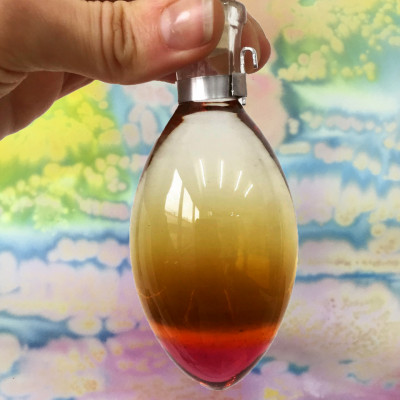
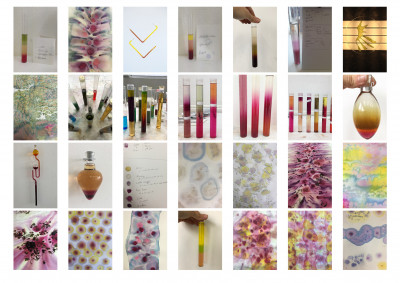
Provided materials: The artist provides samples from her own color archive—some aged mixtures, some fresh.
Introduction: Presentation of the artist’s color archive, brief explanation of plant-based dyes material behavior, and the inspiration drawn from Athanor.
Video input: Screening of a short video in which a beefsteak tomato is prepared—the origin of the artist’s archive (first experiments with tomato skin immersed in ethanol).
Experiment: All materials are placed in ethanol. Initial color changes are observed and documented (photographs, sketches, notes).
Layering experiments: Extraction of the liquids and layering in test tubes to observe which colors mix and which remain separate.
Optional color application: Using pipettes, ethanol-based colors are dripped onto paper to observe reactions and dyes flows.
Final reflection: Group discussion on material aesthetics, transformation, chance, and artistic research.
Living Colors: Plant-Based Experiments with Evelyn Möcking
Workshop, 9 August 2026, 11 a.m.–3 p.m., Mineralien-Museum, Essen-Kupferdreh