
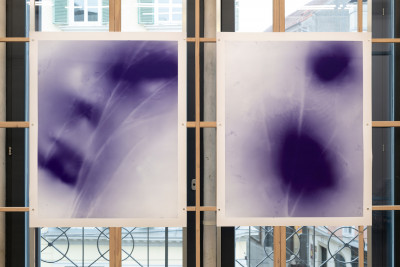
In 1986, Sigmar Polke transformed the German Pavilion at the Venice Biennale into an experimental image environment in which color pigments, photosensitive substances, and climatic conditions interacted. Under the title Athanor, he brought alchemical ideas of an active nature into dialogue with photographic and painterly processes: light, heat, humidity, and chemical reactions became forces that generated images.
Forty years later, a two-day program at C/O Berlin takes Polke’s Biennale pavilion as its point of departure to consider the continuing relevance of this experimental framework. How does our understanding of images change when the processes that produce them are shaped by environmental conditions? What does it mean to see images as carriers of ecological change, technological intervention, and persistent contamination?
The program is part of Sigmar Polke: Athanor NOW, an international research and education project of the Anna Polke Foundation, and also forms part of the After Nature. Ulrike Crespo Photography Prize, presented by C/O Berlin and the Crespo Foundation. In her exhibition, prizewinner Susanne Kriemann reflects on another fortieth anniversary—the Chernobyl nuclear disaster in April 1986—by examining the afterlives of toxic residues and radioactive materials, as well as the traces they leave in landscapes, bodies, and images.
Over the course of one evening and one afternoon, artists, curators, and scholars will come together in conversation. Taking Polke’s experimental system and its connections among hermeticism, photography, chemistry, and material research as their starting point, they will consider how images emerge when material transformation, rather than representation, comes to the fore; when visibility results from processes that themselves remain invisible; and when artistic practice follows the material instead of imposing a predetermined form on it.
A project initiated by Hans-Christian von Herrmann, TU Berlin, Institute of History and Philosophy of Science, Technology, and Literature, and Katja Müller-Helle, HU Berlin, Department for Art and Visual History, Research Centre 'Das Technische Bild'.